This is your check-in post for today. The poll will be open from midnight Universal or Zulu Time (8pm Eastern Time) on Sunday, February 15, to midnight on Monday, February 16 (8pm Eastern Time).
All the fail_fandomanon Rules and Information (and Ban Requests): https://fail-fandomanon.dreamwidth.org/1076.html. The short version: no embeds, don't out people's real names, don't be that much of an asshole, body fluids are off topic, Mods reserve the right to freeze, screen, and delete the fuck out of stuff. FFA discussion covers a wide variety of topics and has a very flexible view of 'fandom' that includes politics, current events, and cooking techniques. FFA is a Choose NOT to Warn experience. Meme away.
Unofficial FFA archive & search: Dememe.info Username/password pairs are nonnie/pony, nonny/seal, or ayrt/velociraptor. As of 2025, Dememe is geoblocked for the UK.
If you have a DW account, you can use DW's content search. Don't forget to tick the box to search in comments. You can also use FFA Rocks.
~ Fulcrum and Rex time travel to before Anakin runs to Mace. - NEEDS CANON REVIEW ~ Sequel to Retrieval - 93 WORDS ~ An Atin universe that is more like The Second Clone War or Mine, All of Them - 23 WORDS
Potential Bunnies Pending Further Bouncing
~ Rachel and Joe meet with BOTH finally aware in Closing Up Shop ~ Drizzt's fallout/Vierna's reactions in the Divining Destiny universe
Finished
~ Ahsoka the Daughter whispering guidance through time in Anakin's head. Starting in AotC TPM. Includes: Okay no wonder some said I was just like you (her reaction to the reckless deal in TPM) / Hey Skykid, what's a guy with all the power thinking to make a point of having time for you? (Comics of the Padawan years) / Oh kriff he's so young (first meeting of Anakin and Rex) / I am SO shiny (Ahsoka arriving) - READY TO POST
Welcome to the fills I made for 3SF this year. Much abuse of grammar, as I hold to the THREE sentence part faithfully.
Fandoms: Wheel of Time (TV), Miami Vice, The Old Guard, Three's Company, Black Sails, Uncle Buck, The Peanuts, Star Wars: TCW (2), Star Wars: ST, Transformers, Detroit: Become Human, Leverage, Earth's Children (2), Gilligan's Island/Fantasy Island, The X-Files
I hope your weekend treated you well, but even if it didn’t, we’re here to celebrate your marathon achievements!
Please reply with your numbers for the weekend–word count, number of pages edited, outlining work–whatever you accomplished. Include what you feel should be included, but please remember that we love numbers almost as much as words.
Sino-Platonic Papers is pleased to announce the publication of its three-hundred-and-eighty-first issue:
“Relations Between Greece and Central Asia in Antiquity: An Examination of the Written Sources” (pdf) by Yu Taishan. PREFACE
The eastward expedition of Alexander the Great of Macedonia is an important event in ancient world history. After the death of Darius III, Alexander marched into Central Asia in order to completely conquer the Achaemenid Empire and establish himself as the Lord of Asia. This move, especially as it resulted in the Greco-Bactria Kingdom founded after Alexander's death, had a profound influence on the history of Central Asia, leaving a deep national and cultural imprint on Central Asia and even the northwest subcontinent. Moreover, the Greco-Bactria Kingdom also played an important role in contact and communication between the cultures of East and West.
Owing to the lack of data, especially of literature, many of the issues in the above process have hitherto remained obscure. Based as far as possible on considerations of existing scholarly achievements, this paper intends to discuss some major links between the regions in this time, with the intention of filling the gaps in my own understanding of this period of history.
—– All issues of Sino-Platonic Papers are available in full for no charge. To view our catalog, visit http://www.sino-platonic.org/
When players get jaded with piles of gold coins or other riches for their exploits, you can turn to symbolic rewards. A knighthood or a noble title. A medal. A bravery award. Having a school named after them.
The cool thing about these is that for some players they bring a great level of satisfaction. And for others they provide something which it's socially unacceptable to complain about, even though it doesn't come with wealth attached.
For bonus points, you can give adventurers a reward that comes with no money, and also a responsibility attached.
The classic "white elephant": Honorary stewardship of some sacred animal, like a phoenix or a unicorn or a giant tortoise. It needs constant care, special food, and occasionally wanders off, causing a scandal if the heroes lose it.
An impressive title (e.g. "Baron of the Southern Marais") that comes with a parcel of the worst possible land, like an insect-riddled swamp, or monster-infested mountains. The new Baron is expected to improve the land, encourage settlement, host expensive festivals, and deliver tax revenue to the king.
The ceremonial Key to the City. Now the mayor expects them to show up to parades, ribbon-cutting ceremonies, and businesses pester the heroes for endorsements.
Honorary Chair of some prestigious elite society, such as a guild of mages or a scientific institution. They have to attend boring meetings, deal with budget arguments, and are constantly bothered by eccentric researchers eager for access to restricted and dangerous vaults.
Keeper of the Town Clock. The most prestigious title that can be offered, but it means they are expected to maintain the ancient clock that constantly breaks down and personally climb the rickety tower in all weather to reset it when it goes awry.
aurilee writes:
Commentary by memnarch (who has not seen the movie)
...Huh. Chewbacca never struck as caring about the medal that much. Or at least, caring about the loss of material things more than the loss of a long time companion. With how the villains have popped back up in some form or another, I doubt Chewie will want any sort of recognition once he realizes/remembers that, if this is how he's acting now.
Poe is almost completely unsurprising here though. I'd forgotten about the dating/marriage thing, but only that just gives Poe a specific way to try and claim items. Annie seems like the sort to have had a character plan out their will, so I guess we'll see if anything actually comes of that. And of course Finn is acting as someone should at the report of a major leader's death. As far as I can tell at the moment anyway!
I was recently blessed to get an hour of KJ Charles time for an interview. Throughout our discussion, she dropped several book recommendations, especially titles that she’s loving right now. I am now imparting those onto you!
Get any good book recommendations lately? Let us know in the comments!
The Last Woman on Earth
I was lamenting the lack of morally gray heroines in romance and Charles immediately put this on my radar. I’m thinking of maybe doing a Rec League in the future.
Nicky believes three things that aren’t true. She thinks the apocalypse was a horrible accident. She assumes her dream of being a journalist died with most of humanity. And she’s sure that she’s straight. She’s about to meet someone who’ll make her question all three – it’s a shame she’s the worst woman in what’s left of the world.
Three years ago, life as Nicky knew it ended when a mystery virus turned a tenth of humans into nocturnal, feral monsters, and everyone else into their prey. Now she’s found a new normal in a survivor community near York. That is until Meredith Hind appears, with her own private army, thinly veiled threats and a challenge for investigate the real origin of the apocalypse.
Meredith’s ruthless, manipulative and infuriatingly sure of herself. Nicky knows that getting involved with her is a terrible mistake, she just can’t seem to stop making it. But Meredith’s a woman with secrets, and if Nicky can’t learn them in time, she may not live to regret it.
The Last Woman on Earth begins a new trilogy about post-apocalyptic monsters, deep platonic friendships and a very complicated romantic one.
This is what Charles called a “grown up” romance. The characters are in their 40s and the heroine doesn’t let others dictate on what she should or shouldn’t do in her life in terms of relationships, career, etc.
What should Erika San Ignacio be doing at her age of 41? The answer has always whatever she wants, actually. No matter what anyone else says. She’s the only non-lawyer in her family’s three generations of lawyers. She has a dating life of flings and non-exclusivity—happy and ready to be single and the favorite tita, for life. And she quit her senior-level corporate job in the middle of a national lockdown to help her best friend fulfill a dream to open a small cafe.
Turns out, the drastic career change might be a good idea after all. The cafe is thriving, she’s enjoying being a cashier and business partner, and the handsome customer who works nearby is a daily highlight, a harmless crush she never speaks to. Life is steady all of a sudden, not demanding and complicated. She’s into it.
What could disturb this peace? Just the favorite customer asking her out on a date, and wanting more. Just the corporate world trying to lure her away from the dream she helped build, with reminders of career goals from the past. When thinking about the life she wants for herself at this age, are these distractions she should say no to—or new challenges to take on?
Cozy folk horror that Charles said had her laughing for several minutes.
From New York Times bestselling and Hugo Award–winning author T. Kingfisher comes an enthralling contemporary fantasy seeped in horror about a woman trying to escape her past by moving to the remote US desert—only to find herself beholden to the wrath of a vengeful god.
With only a few dollars to her name and her beloved dog Copper by her side, Selena flees her past in the city to claim her late aunt’s house in the desert town of Quartz Creek. The scorpions and spiders are better than what she left behind.
Because in Quartz Creek, there’s a strange beauty to everything, from the landscape to new friends, and more blue sky than Selena’s ever seen. But something lurks beneath the surface. Like the desert gods and spirits lingering outside Selena’s house at night, keeping watch. Mostly benevolent, says her neighbor Grandma Billy. That doesn’t ease the prickly sense that one of them watches too closely and wants something from Selena she can’t begin to imagine. And when Selena’s search for answers leads her to journal entries that her aunt left behind, she discovers a sinister truth about her new home: It’s the haunting grounds of an ancient god known simply as “Snake-Eater,” who her late aunt made a promise to that remains unfulfilled.
Snake-Eater has taken a liking to Selena, an obsession of sorts that turns sinister. And now that Selena is the new owner of his home, he’s hell-bent on collecting everything he’s owed.
Charles mentioned this one is really trippy. It reminds me of one of my favorite games, Control.
Humanity is under assault by malevolent “antimemes”—ideas that attack memory, identity, and the fabric of reality itself—in this wickedly brainbending tale of science-fiction horror, an entirely reimagined and expanded version of the beloved online novel.
They’re all around us, hiding in plain sight.
One could be in the room with you, now, just to your left. You could be seeing it right now—but from this second to the next, you’ll forget that you did. If you managed to jot down a note, the paper would look blank to you afterwards.
These entities can feed on your most cherished memories, the things that make you you—and you’ll never even know anything changed.
They can turn you into a living ghost—make it so that you’re standing next to your spouse, screaming in their ear, and they won’t know you’re there.
They are the perfect predators, equipped with the ultimate camouflage—the ability to wipe out memories of their own existence.
And they aren’t just feeding on us. They’re invading.
But how do you fight an enemy when you can never even know that you’re at war? How do you contain something you can’t record or remember?
Welcome to the Antimemetics Division. No, this is not your first day.
If you want to have a little extra fun, be a little more yourself, and be part of keeping the site open for everyone in the future, we can’t wait to see you in our new subscription-based section with exclusive content and events.
Everything you’re used to seeing at the Hot Pink Palace that is Smart Bitches Trashy Books will remain free as always, because we remain committed to fostering community among brilliant readers who love romance.
During the PostSecret Tour through the United Kingdom and Ireland, hundreds of people stepped up to a microphone to share their secrets for the first time.
Some of these soulful secrets were recorded live, gently edited, and scored by One Hello World.
You can listen to 3 of these secret songs below and 15 more here.
This is your check-in post for today. The poll will be open from midnight Universal or Zulu Time (8pm Eastern Time) on Saturday to midnight on Sunday (8pm Eastern Time).
Now through February 20th, Steam is showcasing games “about romance, heartbreak, or even a desire to remain single.” They also mention it’s their first Valentine’s Day themed game festival, and I hope it’s successful because I’d love to see it replicated in the future.
Some of these games may be available on other platforms, but I did not check to see if the sale prices were valid elsewhere.
Here are games on sale that I own and would recommend (in no particular order):
Lakeburg Legacies (65% off – $8.04): A matchmaking and management sim where you partner up your townspeople. I would say this one can be tough at times.
If new games aren’t in your budget right now, there are also a gazillion demos you can try. Here are the ones I downloaded, organized by type according to Steam tags:
I've seen all of these folks up close in suspended death, so it is a breathtaking experience to watch their reanimation.
This is especially so when they look like people you know. The male in the video, whom I refer to as "Ur-David", is the doppelgänger of my second oldest brother (èrgē 二哥) (Hughes 2011, p. 42a).
Selected readings
Hughes, Samuel. "When West Went East", Pennsylvania Gazette (January-February, 2011), 42a-47b.
Mair, Victor H. “The Rediscovery and Complete Excavation of Ördek’s Necropolis.” The Journal of Indo-European Studies, 34.3-4 (Fall / Winter, 2006), 273-318.
The exhibition Secrets of the Silk Road explores the history of the vast desert landscape of the Tarim Basin, located in Western China, and the mystery of the peoples who lived there. Located at the crossroads between East and West, oasis towns within the Tarim Basin were key way stations for anyone traveling on the legendary Silk Road. Extraordinarily well-preserved human remains found at these sites reveal ancient people of unknown descent. Caucasian in appearance, these mummies challenge long-held beliefs about the history of the area, and early human migration. The material excavated suggests the area was active for thousands of years, with diverse languages, lifestyles, religions, and cultures present. This exhibit provides a chance to investigate this captivating material to begin to uncover some of the secrets of the Silk Road. Dr Victor H. Mair, Curatorial Consultant for "Secrets of the Silk Road," and co-author, The Tarim Mummies, discusses the ongoing discovery of these extraordinary mummies, what we have learned-and what remains to be uncovered.
The exhibition "Secrets of the Silk Road" opened February 5, 2011 at the Penn Museum,
_____. “Stylish Hats and Sumptuous Garments from Bronze Age and Iron Age Eastern Central Asia,” Orientations, 41.4 (May, 2010), 69-72.
_____, ed. Secrets of the Silk Road. Santa Ana, California: Bowers Museum, 2010.
_____ and Jane Hickman, ed. Reconfiguring the Silk Road: New Research on East-West Exchange in Antiquity. Philadelphia: University of Pennsylvania Museum of Archaeology and Anthropology (published by the University of Pennsylvania Press), 2014.
Williams, Amelia. "Ancient Felt Hats of the Eurasian Steppe". In Victor H. Mair, ed., "The 'Silk Roads' in Time and Space: Migrations, Motifs, and Materials". Sino-Platonic Papers, 228 (July 2012), 66-93.
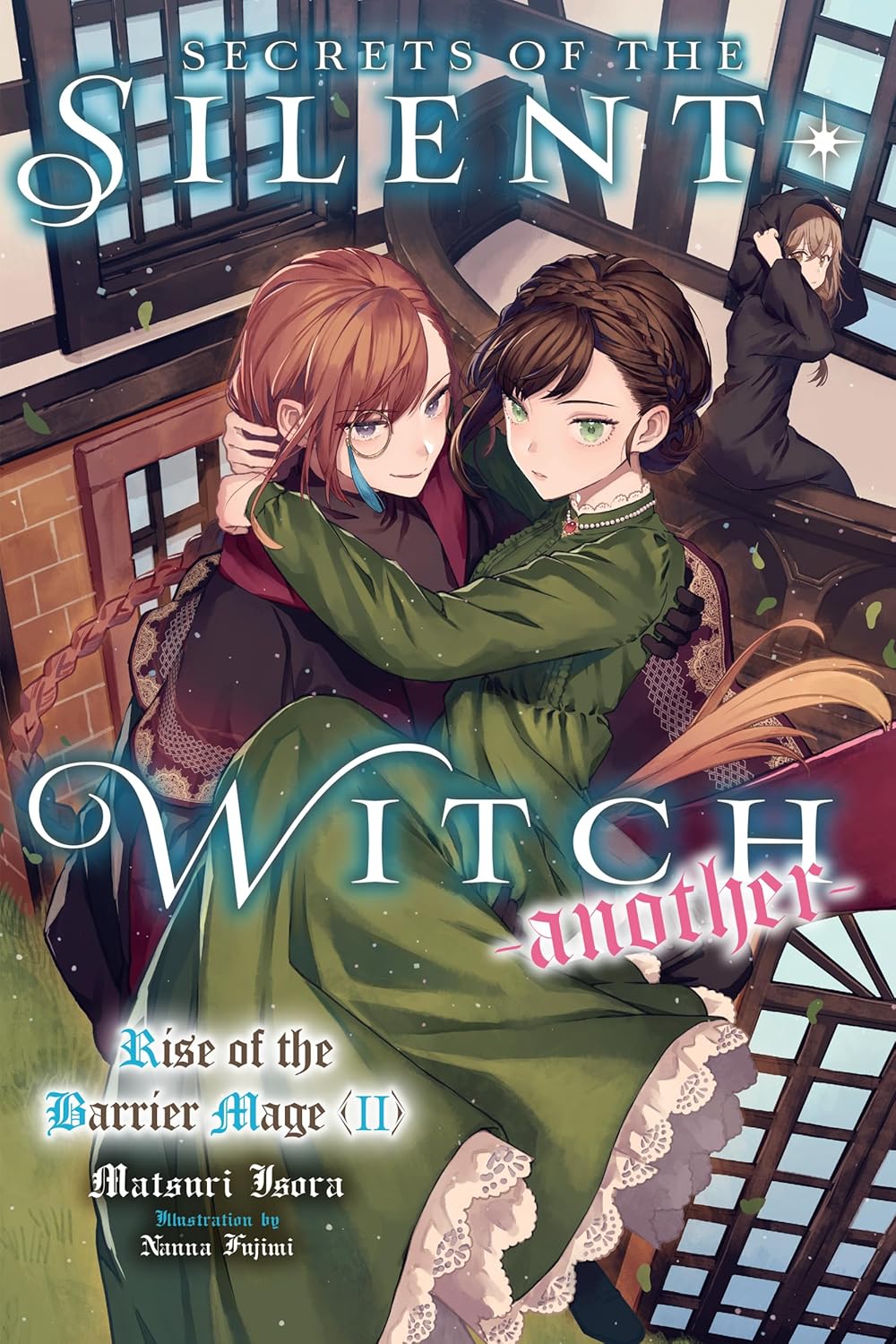
By Matsuri Isora and Nanna Fujimi. Released in Japan as “Silent Witch: Another – Kekkai no Majutsushi no Nariagari” by Kadokawa Books. Released in North America by Yen On. Translated by Alice Prowse.
It can be difficult to review books that are tension-filled, well-written, and give fans of the series exactly what they want but have one particular thing that is not to the reviewer’s taste. This is that sort of book for me. I mentioned online that I hate amnesia plotlines, but that’s not quite true. I don’t mind, say, the reincarnated person having no memories of their time in Japan, that sort of thing. But it’s amnesia designed to break a couple apart and make them both upset that I don’t like, and that’s what we get here in spades. It’s handled very well, especially because, thanks to the vagaries of the plot, the two of them hadn’t seen each other in forever, and events conspired to make things suspicious. Throw amnesia on top of it, and you have a really good book that STRESSES ME OUT. Just fix it and get married, dammit.
A few years after the events of the first spinoff book, and Louis Miller has it made. He’s commander of the Magic Corps, well-respected for his barriers saving lives, has fought several dragons, he now looks and talks like a respectable gentleman, and he even has a nice house of his own. All he needs to do is become one of the Seven Sages. This is because Rosalie’s father has demanded that he fulfill all these conditions before he’ll let Louis marry her, and has, in fact not allowed them to make contact with each other all this time (something, it later turns out, he forgot he did, because as a dad he’s kind of awful). Fortunately, Rosalie’s father has to retire soon as his magic power is weakening, meaning there is a Sage opening available. Now all he has to do is duke it out with the guy from school who hates him more than anything in the world. Oh, and the other candidate. Who is… wait, who is this twitching creature?
Yes, fans of Monica can relax, because though the book doesn’t focus on her, she is in it, and gets a scene where she completely shows off why she’s a sage and why it happened so quickly. In the main series, Louis gets questioned about bullying Monica all the time, and mentions that he only bullies the strong. He’s clearly thinking of this, as she destroys both the other candidates. That said, a lot of Louis’ problems in this book are Louis’ own fault. He’s so obsessed with his goal, but only a few people know why he’s doing it, so everyone just assumed that he’s a terrible person… even Rosalie doubts him, when they meet after so long and he looks and sounds like a different person. And then she tumbles off a roof. I will also note that, aside from the actual bad guy, Glenn Dudley reminds us once more why he’s such a giant pain in the ass. I respect Louis for not murdering him.
Not to spoil an obvious thing, but things do work out and they both live happily ever after. So next time we get back to Monica’s present-day adventures… whenever that is, as Book 8 isn’t scheduled yet. Fans of the series who don’t get very stressed about amnesia ruining true love should love this.
TW: racism, sexism, classism, animal abuse, child abuse, bullying, gaslighting, domestic violence, rape (implied), kidnapping, alcoholism, gambling, death in childbirth, possible brother-sister incest, a LOT of cousins getting married
Unless you live under a rock, and if you do, for the love of God, please invite me to live there with you, you know all about Emerald Fennell’s “Wuthering Heights” which is referred to in the trailer as “The Greatest Love Story of All Time.”
I haven’t seen the movie yet so I’m not going to comment on it. What I do want to do is give you a teensy heads up in case you run off to read “The Greatest Love Story of All Time,” and also to talk about some of the things that matter in the novel that are frequently lost in adaptations of the novel. As I tried to sum up my points, I realized that none of them make any sense unless you know the full plot of the novel – so this is a long post. But if you want to cut to the chase, look for any time I write some version of “AND THIS MATTERS” for the highlights.
Wuthering Heights tells the story of a boy (Heathcliff) and girl (Cathy) who grow up poor, abused, and neglected, in a home in which alcoholism is rampant and women, children, and animals are routinely abused. It tells of how these two children are affected by the limitations placed on them regarding their race, their class, and their gender as they grow up, and how they embody and perpetuate the cycle of abuse. It also contains a love story – but not the one you are thinking about.
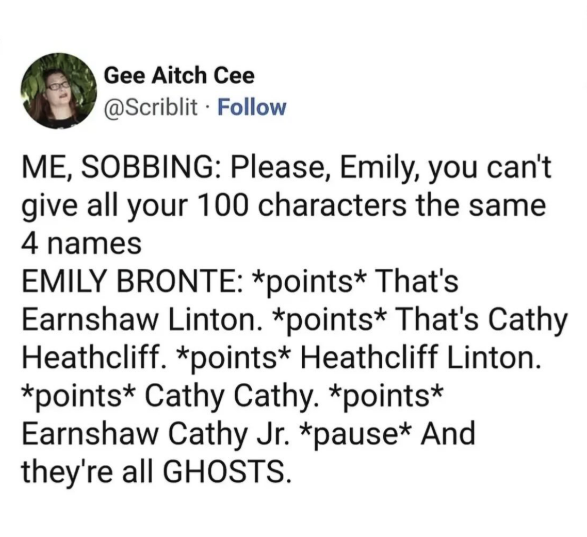
I’m going to attempt to summarize the events of the book. Bear with me since there are two Cathys, a family with the last name Linton, a character named Heathcliff, and a character named Linton Heathcliff.
Just roll with it – and prepare for child abuse, abuse of animals, and domestic violence.
For a more accurate timeline of events, look at The Reader’s Guide to Wuthering Heights. Seriously, my retelling gets pretty messy because so many storylines overlap. I’m also oversimplifying or outright eliding some stuff, like the role of religion, the role of nature, and the characters of Nelly and Jacob and the unreliable narrator/nested flashbacks writing device.
The very first thing that happens in Wuthering Heights is that a lost traveller is attacked by dogs. He is brought into a house (Wuthering Heights) where the inhabitants of the house proceed to abuse animals and spit verbal abuse at each other. There is no beauty or softness in sight. This is a world in which cruelty is baked in, people, AND THAT MATTERS because all that Cathy and Heathcliff know how to do is endure cruelty and deal out cruelty to others.
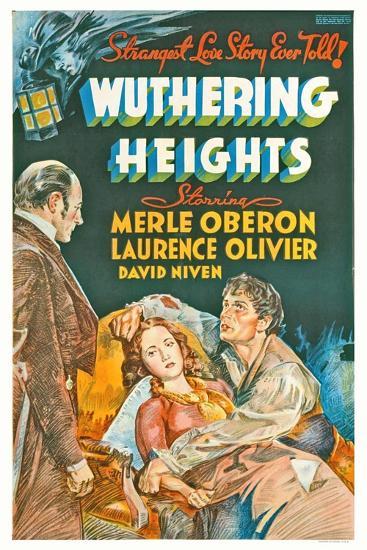
This one is the STRANGEST love story ever told and I’ll accept that tagline
We learn in an extended flashback that when Cathy Earnshaw was six and her brother Hindley was fourteen, their father, Mr. Earnshaw, came home from a business trip with a child in tow whom their father names Heathcliff – one name only.He does not give the child his last name AND THAT MATTERS because Heathcliff’s very existence as someone without a surname immediately marks him as placeless in society.
Heathcliff’s parentage is a mystery although many readers have assumed that Heathcliff is Mr. Earnshaw’s illegitimate son which makes much more sense then him collecting a random child off the street and also adds ‘incest’ to the list of trigger warnings. Mr. Earnshaw dotes upon Heathcliff and neglects Hindley, who beats Heathcliff, because hurt people hurt people. Heathcliff and Cathy are inseparable as children, even after Mr. Earnshaw dies and Hindley forces Heathcliff to work as a servant.
DIGRESSIVE RANT AHEAD: RACE MATTERS!
Allow me to digress – a lot. Heathcliff is referred to frequently and from the onset as having dark hair, skin, and eyes. He is from a port town which caters to the slave trade, so he might be African. He may also be, and is suspected to be by various characters in the novel, Spanish, Indian, Irish, Chinese, or Romani. Of course if he is Mr. Earnshaw’s biological son, then we add that into the genetic mix.
Heathcliff’s ethnicity is deliberately ambiguous. However, the one thing Heathcliff is not, is ‘White.’ His appearance visibly, immediately, and inescapably marks him as ‘other’. He can change his clothes and his income but he cannot change his skin, AND THIS MATTERS because Heathcliff is driven by a desire to prove his superiority over the people who have told him that he is not good enough. And by ‘people’ I mean every single person in his life, including Cathy. He can’t be seen as a respected member of society and he certainly isn’t seen as a suitable match for Cathy, not even by Cathy herself. Race is not the only factor here, but it is a factor, and one that Heathcliff can’t change.
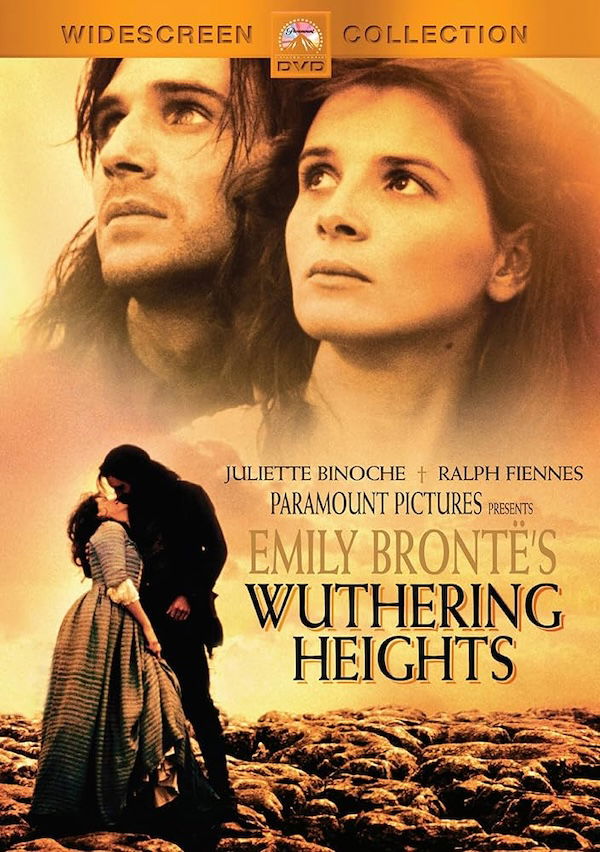
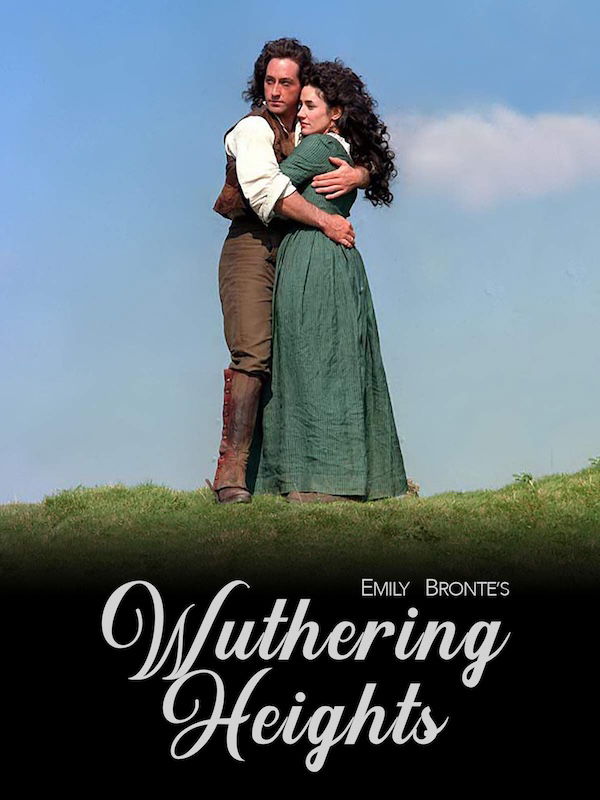
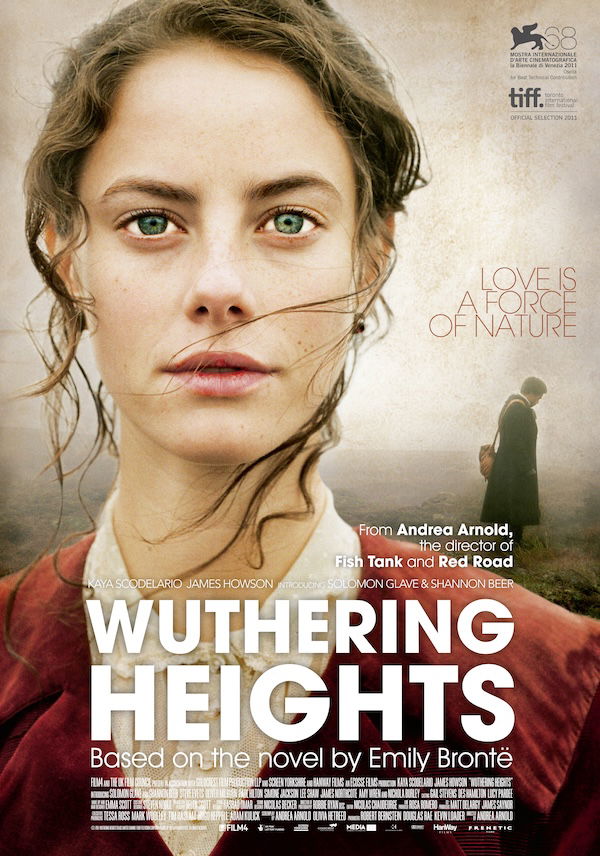
A note about systemic racism: When I read Wuthering Heights as a young teenager, I pictured Heathcliff as White, as, apparently, did Emerald Fennell when she read the book as a fourteen-year-old. This misreading, born of a culture that constantly seeks to erase Blackness by insisting on the White default, was reinforced by film adaptations in which Heathcliff has consistently been played by White actors, with the exception of the 2011 version in which he is played by James Howson, a Black actor.
This string of White Heathcliffs isn’t an accident, any more than it isn’t an accident that I read Heathcliff as looking, well, a lot like Jacob Eloridi, or Tom Hardy, or Laurence Olivier, or Ralph Fiennes, despite countless comments in the text to the contrary. The fact is, neither the Hays Code nor the culture of Britain or America would stand for an interracial couple in film.* AND THAT MATTERS because our culture’s insistence on a White Heathcliff is based in racism, just as the book version Heathcliff’s mistreatment is based (in part), on racism.
Emily Bronte deconstructs a great many damaging elements of Victorian culture in Wuthering Heights, including the racism. Surely a book that interrogates so many toxic elements of Victorian culture deserves a better reading than the one I gave it when I was twelve.
(*Trivia alert: Actually, we did get an interracial couple in the 1939 version of Wuthering Heights, because Merle Oberon, who played Cathy, had a White father and a Sri Lankan mother, but spent her career concealing her mixed-race heritage.)
When Cathy is around twelve years old and Heathcliff is maybe thirteen, Cathy and Heathcliff spy on the home of the wealthy Linton family. They don’t have cable; they have to make their own fun, harr harr. The Linton’s guard dogs attack Cathy and she is brought into the house to recover while Heathcliff is forced to leave.
Years pass, and Heathcliff overhears Cathy saying that she could never marry Heathcliff due to his lower class status: cue Big Misunderstanding. He nopes off to make his fortune and Cathy, thinking that Heathcliff is gone forever and that marriage to Edgar Linton is her only chance at escaping her horrible home, gets married to Edgar Linton at the age of seventeen and suffers the fate of one who was born to be a pirate queen but instead is forced to do embroidery while smiling sweetly.
But wait! Heathcliff is back! And he has vowed revenge upon everybody! First he goes for Hindley. Hindley took time off from his busy schedule of torturing Heathcliff to get married, after which he returned to Wuthering Heights. His wife died in childbirth, leaving poor baby Hareton to the tender care of Hindley and Heathcliff, the world’s worst two dads.
TW/CW child peril
In one moment that is not only horrifying but also kind of awfully funny, a drunken Hindley drops the baby off a bannister and Heathcliff catches the baby by pure instinct and then rages at himself for having done so.
Heathcliff basically turns Hindley into a gambling addict and an alcoholic and wins ownership of Wuthering Heights in a game of cards, and Hindley dies a drunk, possibly by accident, probably by murder. Got all that?
Next up: revenge on Edgar by destroying the life of Edgar’s sister, Isabella. Heathcliff convinces Isabella that he is a bad boy with a heart of gold who just needs the love of a good woman, and he then convinces her to elope with him, just to make Edgar furious and Cathy jealous. Heathcliff then proceeds to…
TW/CW this guy is just shite.
…beat Isabella, it’s implied that he rapes her, and then imprisons her while forcing her to labor as a servant until she escapes while heavily pregnant and hides with Edgar’s help.
She has a baby whom she names Linton Heathcliff.
Meanwhile Cathy gets pregnant with Edgar Linton’s child, has a fraught meet-up with Heathcliff, has the baby and dies of childbirth and that Victorian classic – brain fever.
Here’s where I remind our readers that at the time of her death, Cathy is eighteen, AND THIS MATTERS.
Do you know why, during her short “adult” life, Cathy acts like a teenage nightmare brat from hell? BECAUSE SHE IS ONE. Her home is as hellish as possible and she is literally a teenager! As is Heathcliff, who has lived some secret life that evidentially involved a lot of suffering and maybe some crime and loses the love of his life while he is nineteen or twenty years old! And Isabella, who does a romantic and foolish thing in falling for Heathcliff, is also eighteen! Their ages matter because they are never given time to mature, to have other experiences, to grow.
Most adaptations cast older actors and lose this entire layer, and I think it sucks a lot of tragedy out of the story even when the actors are extraordinary. Heathcliff’s emotional growth is frozen at the age at which he loses Cathy, and of course Cathy’s growth is frozen by death. The very most mature of teens struggle with things like communication, emotional regulation, and impulse control. Is it any wonder that these two teenagers can’t just marry each other and grow the fuck up, given not just their ages but also the mercurial and violent upbringing that they share?
Heathcliff responds to Cathy’s death in a very healthy and normal manner.
HA HA HA No, he doesn’t.
Heathcliff digs up Cathy’s corpse and makes out with it, he begs Cathy to haunt him, he dies, their ghosts haunt the moors.
This wraps up most adaptations. As in, they end here.
It has been so far a story about codependency and enmeshment and lust. But has it been a story about love? The Greatest Love Story Ever?
Hardly. Cathy and Heathcliff do not wish for the other to be happy, even at the cost of their own happiness. They do not bring out the best in each other. They do not sacrifice for each other’s good. They are obsessive, they are clueless (in the sense that they have no models of healthy interaction or coherent communication to draw from in their lives), and they are deeply, deeply selfish.
So while I would call it a powerful story, I personally wouldn’t call it a love story. I would call it a story about the generational trauma of abuse and alcoholism. I would call it a story about how being abused as children creates abusive adults. I would call it a story about how people who feel trapped – by race, by class, by gender, by geography, by untreated mental and physical illness – do self-destructive things in attempts to escape those traps. But I wouldn’t call it a love story.
But it isn’t over my friends! Adaptations may stop here, but the novel is only half over AND THAT MATTERS because it is in this half that the themes of the book really play out.
In the novel, Heathcliff does not die soon after Cathy does, because he has revenges to plot. He figures that the best way to continue to get back at Hindley, Edgar, and Cathy is to degrade and abuse their children as much as possible. It is Heathcliff’s deepest wish to turn all the children of his tormentors into the worst people they can possibly grow up to be.
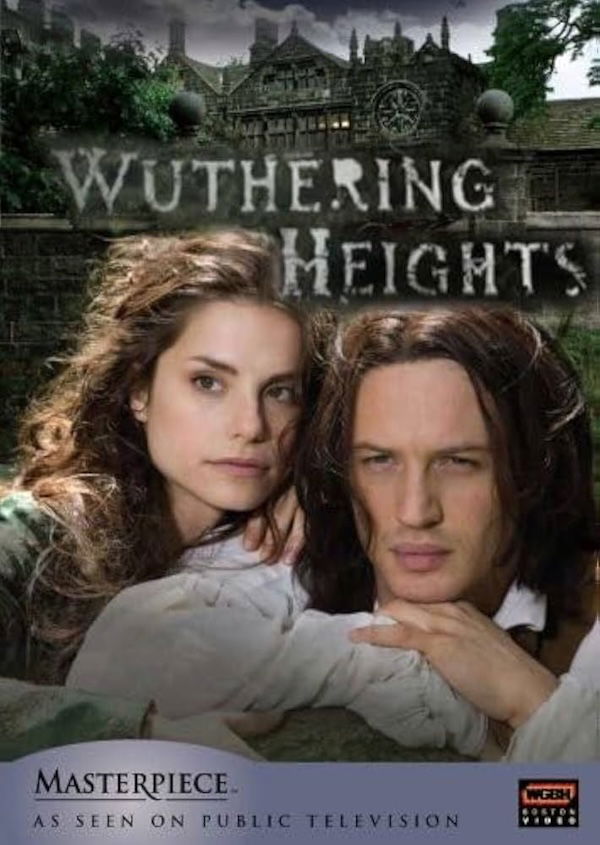
I wasn’t crazy about the actual performances, but I did appreciate that Heathcliff and Cathy were cast with racially and age-appropriate actors in the 2011 production, which also features wonderful cinematography.
Behold:
Heathcliff is now the head of Wuthering Heights where he terrorizes everybody. He’s still mad at himself for his failure to murder a baby, and the baby, Hareton Earnshaw (remember, the son of Hindley, Cathy 1.0’s brother?) is now a young man living like a servant under Heathcliff’s thrall. Hareton is taught to dress, work, and speak like a farmhand. He is not allowed to leave the estate or to learn to read.
Also sharing this happy home is Heathcliff’s son, Linton (Edgar’s nephew), who Heathcliff forced to live at Wuthering Heights when Linton was about twelve. He is always described as ‘sickly’ and under Heathcliff’s dubious care he becomes a petty, cruel whiner – in short, the worst version of himself.
When Linton and Cathy 2.0 (Edgar and Cathy’s daughter, who is also named Cathy) are fifteen and sixteen, respectively, Heathcliff convinces Cathy 2.0 to run away from home and marry Linton. Poor sickly Linton dies at the age of seventeen, with no doctor (forbidden by Heathcliff of course) and no company except for Cathy 2.0. Also please note that by withholding medical treatment Heathcliff essentially kills his own son just to spite his son’s mother, who is already dead.
Meanwhile Cathy 2.0 is effectively Heathcliff’s prisoner. Her imprisonment makes the formerly cheerful and kind girl bitter and furious, almost deranged with despair – the worst version of herself, as Heathcliff hoped.
When Cathy 2.0 first arrives at Wuthering Heights, she despises Hareton, and with good reason. Despite the abuse he receives, he is devoted to Heathcliff. Cathy 2.0 is essentially imprisoned at Wuthering Heights and Hareton does not offer to help her. He strikes her as dirty, illiterate, and complicit in her hellish life as a widow under Heathcliff’s control, and her assessment is initially correct.
However, over time, Hareton keeps extending small kindnesses towards Cathy 2.0, and over time, she begins to reciprocate. After she makes fun of Hareton for not being able to read, she realizes that she has hurt his feelings, repents, and offers to teach him. The next thing you know, they are wandering the moors and becoming real friends and falling in real love – they care about each other, they are kind to each other, they support one another in becoming better people. They are capable of change and healing.
Heathcliff is now, because of various deaths and marriages that he has orchestrated, the owner of both Wuthering Heights and the Linton estate, Thrushcross Grange. However, he finds himself increasingly tormented by Cathy 1.0’s ghost – so much so that he can’t even muster the energy to break up the happy couple.
Every time he tries to hit Cathy 2.0 or yell at her, he finds himself unable to move, or distracted. He feels the presence of Cathy 1.0 protecting her daughter from him. Finally he goes into Cathy 1.0’s room and starves himself to death. Cathy 2.0 and Hareton give up Wuthering Heights and get the heck outta there. The End.
For Heathcliff and Cathy 1.0, ‘love’ is selfish and ‘love’ is death.
For Hareton and Cathy 2.0, love is selfless and love is freedom and life.
So yes, there is a great love story in Wuthering Heights. AND THAT MATTERS because, if Emily Bronte wanted us to see Heathcliff and Cathy 1.0 as a great love story, why include its contrast? Cathy 2.0 and Hareton are a rebuttal to the claim that Cathy and Heathcliff are the greatest love story of all time – not just because they do horrible things but because they act without empathy, they are deeply selfish, and they cannot or will not change.
But even though Cathy 2.0 and Hareton have been abused, they are capable of growth, and they do act out of empathy, and they do want their lover to be happy. And that’s real love. It may not be “The Greatest Love Story Ever Told,” but it’s much better than Heathcliff and Cathy 1.0, no matter what the trailer says.
Welcome back and happy weekend! Here’s what we’re reading right now:
Lara: I am reading a book that I have tried to get my greedy little paws on for MONTHS and finally I HAVE IT! How to Lose a Lord in Ten Days by Sophie Irwin. ( A | BN | K | G ) It’s possible the anticipation of this release has raised my expectations unreasonably high, but I am cautiously optimistic that it’ll be great. I’m only a chapter in so far!
Elyse: I’m on a new anti seizure medication for my fibro so I’ve got some couch/acclimation time.
I watched A Knight of the Seven Kingdoms which prompted me to do a Game of Thrones ( A | BN | K | AB ) re-read.
Shana: I just finished Time Loops and Meet Cutes by Jackie Lau. ( A | BN | K | AB ) It’s always a good day to read a Jackie Lau book. Now I’m getting sucked into a non-romance, The School for Good Mothers by Jessamine Chan. ( A | BN | K | AB )
Tara: I just finished When She Flies by Lee Winter. ( A | BN | K | G ) It’s an interesting time to read a book where one of the leads is the CEO for a company that makes luxury goods for the uber wealthy, but I enjoyed it overall, including where she ends up.
Sarah: I’m deep in early-2000s paranormal romance. I gulped down Alpha & Omega by Patricia Briggs in a frantic re-read and dove straight into Cry Wolf. ( A | BN | K | AB ) I’ve never read past that book and maybe now I’ll try book 2.
![[personal profile]](https://www.dreamwidth.org/img/silk/identity/user.png) mecurtin posting in
mecurtin posting in ![[community profile]](https://www.dreamwidth.org/img/silk/identity/community.png) fandom_checkin
fandom_checkin

![[syndicated profile]](https://www.dreamwidth.org/img/silk/identity/feed.png)



 Welcome back and happy weekend! Here’s what we’re reading right now: